

Table of Contents | Article doi: 10.17742/IMAGE.TP.13.2.4 | PDF
Gender and Migration: Resisting with a Camera. A Researcher to Researcher Experience
Introduction
This manuscript is a reflexive collaboration between two differently situated researchers meeting at the crossroad of knowledge and visual activism at three levels: first, it uses a case study to analyze the possibilities of photovoice as a form of resistance against discourses of hate, which we define as a series of contextualized practices by which dominant groups construct “negative representations of the dominated group” (van Dijk 1992, 115) able to incite discrimination and even physical violent acts against specific groups. Second, it reflects on the ways in which the observed and the observer cooperate to construct from their own perspectives a legitimized knowledge aiming to promote visibility and social transformation. Finally, it revises the ways in which images may become a form of visual activism or not, depending on the use we make of those images.
The idea for this project emerged during a workshop called Las Resistentes,1 a series of seminars on feminism and women’s empowerment for social transformation, in which participants learned and applied the method of photovoice to engage in discussions and understandings of gender-based experiences in the Spanish society. Adriana, an immigrant journalist from Venezuela, and I, a Spanish sociologist working on migration met at the seminars and decided to collaborate in the analysis of the photovoice project she realized in reference to visual activism. I approached Adriana because her pictures reminded me of Diane Arbus’ photography: poignant and personal, and intimately different from the other photovoices I was used to. Fascinated by her representations and style, I invited her to be part of a project in visual sociology and resistance. Starting from her initial participation as an interviewee, our partnership progressively evolved into a collaboration in which Adriana took a leading role in analyzing and presenting her insights about what it means to resist with a camera.
Adriana and I come from different disciplines, each of us carrying with herself specific views of community engagement and social transformation. Yet we found a comfortable fit in our desire to bring our subjectivities into research: Adriana’s trajectory as a journalist and her personal experiences as a migrant woman provided the ground for a powerful and elaborated visual storytelling of her everyday life. On my end, as a visual sociologist interested in gender and migration, I associated these personal stories to broader theoretical frameworks and understandings of power dynamics in society. I have been a migrant for over eighteen years: I have lived in three different countries, and even now that I am back to Spain, my cultural roots are foreign to Seville, in southern Spain, where the seminar took place. This work is the product of our synergic and yet different ways to understand and talk about migration. It goes beyond using photovoice to analyze gender and migration but rather engages in a methodological debate about the practice of photovoice itself and the questioning of democratization and resistance in research.
In what follows, I will first introduce Diane Arbus’ work as the inspiration to think of photography as a tool of resistance against the hateful political discourse on migration that was performed in Spain during the 2019 election period. Then, I give a brief description of this project’s political background, which is of utmost importance as it contributed to the general social mood regarding migration. Next, Adriana will introduce a photovoice inquiry on her experiences as an immigrant woman in Spain. Following that I will then reflect on Adriana’s process of self-exploration, research, and resistance as a possible form of visual activism, hightlighting its potentials and limitations. Finally, in the conclusions, Adriana and I collaboratively discuss the importance of including in our research forms of knowing that extend beyond the academic to embrace community-based empowerment and activism.
Diane and Adriana: interpreting the world through a camera
“Giving a camera to Diane Arbus is like putting a live grenade in the hands of a child.” This was the opening sentence of a New York Times article in September 2003 by Arthur Lubow. The words were pronounced by Norman Mailer in the 1970s, after seeing the portrait that Arbus made of him. With those words, the writer and art critic referred to the merciless honesty of Arbus’ photography and the power with which her camera captured what was considered unportrayable in her historical time. As a photographer, Diane Arbus boldly moved from the fashion industry to the street, where she pointed her camera toward unusual subjects, most of whom were experiencing and reproducing the societal margins through their own bodies. bell hooks beautifully defines margins as “part of the whole but outside the main body […] a central location for the production of a counter hegemonic discourse that is not just found in words but in habits of being and the way one lives” (1989, 20). Arbus and her Rolleiflex2 (Gross 2012) followed those people in the sites in which they survived. It was an anthropological voyage into deep urban, social, and cultural undergrounds.
One of the most innovative aspects of Arbus’ work, which allowed her to stand apart from other photographers, was that she reconfigured the relationship between the photographer and the person photographed into a collaborative experience (Bosworth 2005). She did not pretend to objectively narrate the worlds of the people she photographed. Rather, she wanted to expose how these “others” perceived the world in which she was living. This “seeing” from their own perspective implied a complex and yet inevitably limited exercise of empathy, empowerment, and resignification on both sides, that of the watcher and that of the watched. It opened up social and political constructions to new possibilities and understandings, because when photographs and images are able to reposition viewers on a different side, to make them see what they did not see before, they become weapons of critical thinking and even rebellion. This sort of visual provocation is what Mailer acknowledged in Arbus’ photography: she narrated the world from the other side, rather than the other side of the world, and she did this without any trace of prescribed charity or voyeurism. As she wrote in her autobiography, “I work from awkwardness. By that I mean I don’t like to arrange things. If I stand in front of something, instead of arranging it, I arrange myself” (Arbus 1972, 12). Sociologically speaking, this subjectivization of the social phenomenon under observation was a break from structuralism and from the empiricism of the time. Diane Arbus’ work and her style of “borrowing” through her camera the world around her, represented in many senses an exploration of the arguments claiming for new epistemological possibilities of knowledge and the ontological role of research.
We used the symbolic sphere of photography as a strategic tool to move people away from their normative and accepted status quo and to instill new ideas for social interpretation and order. Pictures hold the potential to make visible the power dynamics of a society, if used in the right way and context. Similar to Diane Arbus’ art, a camera can become a means to deconstruct, construct, and reconstruct narratives of normality, domination, and resistance. In this manuscript we narrate the ways in which one of the researchers involved in this project, Adriana, used the camera to give a personal account of herself as a migrant woman in Spain, at a time in which the right to participatory citizenship and recognition has been questioned by some political parties in the last few years, as we will discuss in the following section of this manuscript.
Similar to Diane Arbus, Adriana used the camera with boisterous honesty to position the viewer on the other side of the social spectrum, to question power, and to invite viewers to see from a non-dominant perspective. She did more than capturing representational images of her experiences: she made visible discourses and narratives of discrimination and hate towards migrants that are present in some public discourses, especially from the Spanish far right. This is the position of the unportrayed, of those who often swim against the current and need to resist it.
The story behind: a political background
The significance of Adriana’s photographs needs to be politically and socially contextualized. The recent breakthrough of far-right political parties in the European sphere has represented a change of public discourse around social phenomena such as migration and gender (Edenborg 2018). During both the regional political campaign in the autonomous region of Andalusia in 2018 and the presidential electoral campaign in 2019, politicians talked about the “migration crisis” as a main social issue. This highly politicized concern moved voters around discourses of national identity and defense, in a populist turn similar to the one experienced recently in the United States with Donald Trump, in the United Kingdom with the Brexit, in Italy with Matteo Salvini, and in Brazil with Jair Bolsonaro.
Under the premises of public security, economic protectionism, and cultural safeguard, some parties strongly opposed the arrival of migrants, especially if coming from Middle Eastern countries. With political slogans such as “we do not want an Islamized Europe” or “we will start the Reconquest”3 (alluding to the end of Muslim occupation of the Iberian Peninsula in the 15th century); and misleading information such as “there are more than 50 million African migrants saving money to come to Spain,”4 migration was presented as an obvious issue for Spain. Statements of this kind tend to jeopardize populations that are already vulnerable, as public hostility against migrants during political campaigns has a negative influence in the natives’ social perception and attitudes toward the newcomers (Wayne 2008).
In parallel to the migrant discourse, gender has also been at the core of recent political campaigns in Spain. Strong grassroots feminist movement have been highly visible since the massive street demonstrations of March 8 in 2018 and 2019,5 and an increasing number of women have felt empowered to express their concerns regarding gender equality and violence. Most feminist groups framed women’s rights as human rights; this argument was key to construct a collective awareness about vulnerable populations, such as undocumented migrant women. Even more, the well-established and now popular Spanish Feminist movement has actively called its sympathizers to become not only agents of gender equality but also a street force to put a brake on the political advancement of the far right. For example, many feminist platforms endorsed a manifesto in favor of the rights of migrants and other vulnerable people.6
The interplay between dominant political discourses and the counteraction of feminist activism served as the background of this manuscript. Within this challenging social context, Adriana’s account emerged as a form of activism opposed to the many discourses of hate that have impacted her life. Her photographs had a double function: on one side, they were qualitative data documenting her understandings of and opposition to anti-immigrant discourses. On the other side, they were a historical testimony of the changes of public discourses in our society. In this manuscript, Adriana’s collaboration was instrumental for introducing her own photovoice project and her own constructions of gender and migration, grounding the conclusions in the politics and practices of everyday life.
Adriana: Experiences from the other side
I discovered photovoice as a research and data collection technique when I prepared to start a course and workshop called Las Resistentes in 2019 in Seville, Spain. To prepare for the course, I read an article by Christopher Yañez-Urbina et al. (2018) in which photovoice is described as a participatory action that allows for new reflections about our own realities. I understood photovoice as a form of activism that facilitates people’s participation and social transformation, a concept that adheres to the root of Caroline Wang and Mary Ann Burris’s (1997) principles. It also reminds us that, beyond the theories that are so important for knowledge and for channeling actions, lie experiences, both lived in their immediacy and elaborated afterwards.
My experience as a migrant woman was different from that of the other group members I was working with during the course. In these circumstances, I developed my own project, “Venezuela with the voice of an immigrant woman.” This was a photovoice project in which I worked for four months, preparing photographs and selecting six of them, to be shown at the Las Resistentes exhibition in Seville in 2019. In addition to being a woman, a migrant, a mestiza, and a feminist, there is another crucial component to my identity: I am a journalist, and this pushed my desire to communicate what it means for a person from South America to be in another continent, living unfamiliar experiences that, at times, have been incomprehensible to me. When doing photovoice, however, I stripped myself of the journalistic mission to report events objectively “as they are,” in order to let my subjective voice as a woman flow. Also, most journalistic photography responds to the latest event or information. It is, in other words, a medium to inform about something. My photographs, instead, lose this connection to the new and the need to notify: they are timeless. A personal voice that, at the same time, became collective since it is the echo of many other Venezuelan and Latin American women who live in Seville. I realized that neither the perfect photography nor the photojournalistic vision was necessary. Instead, the power of the voice relied in transmitting a testimony through images. The workshop instructors asked us to take six photographs through which we could tell a story that was local and, at the same time, universal. What has happened to me in Seville could occur in other places and with other names and experiences.
My photos: The voice of a migrant woman
I took more than thirty images through a digital camera, an analog camera, and a lomography camera. All of the photographs were in black and white to accentuate the predominant features of the images in their greys. Ted Grant once said that if a person was photographed in color, he photographs her clothes, while if he photographs her in black and white, he photographs her soul. That was what I wanted to capture, elaborate, and convey, how I felt and saw myself deep inside, a body crossed by many circumstances at the same time. I photographed my body to talk to the audience, expecting to be seen and heard.
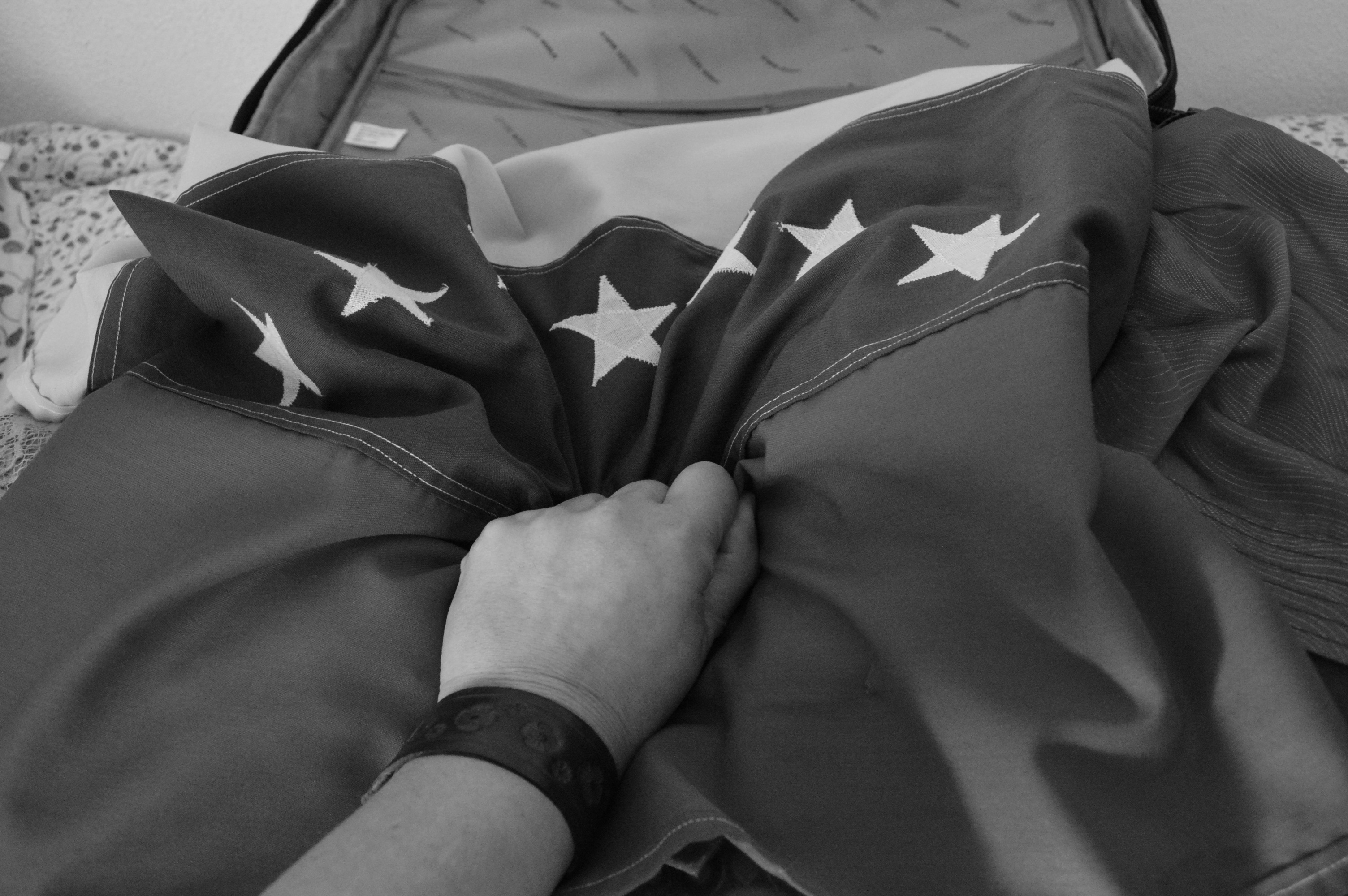
The suitcase is open on a bed, with my hand grabbing the flag of Venezuela (figure 1). The closed hand is the rooting, as I wanted to keep my nation with me. I am a forced migrant; I have experienced an imposed exile which I consider a form of violence from the Estate towards its citizens. I am not alone: by 2020, more than 4 million are part of the Venezuelan diaspora due to the Complex Humanitarian Emergency (CHE)7 and the political, economic, and social unrest of the country.
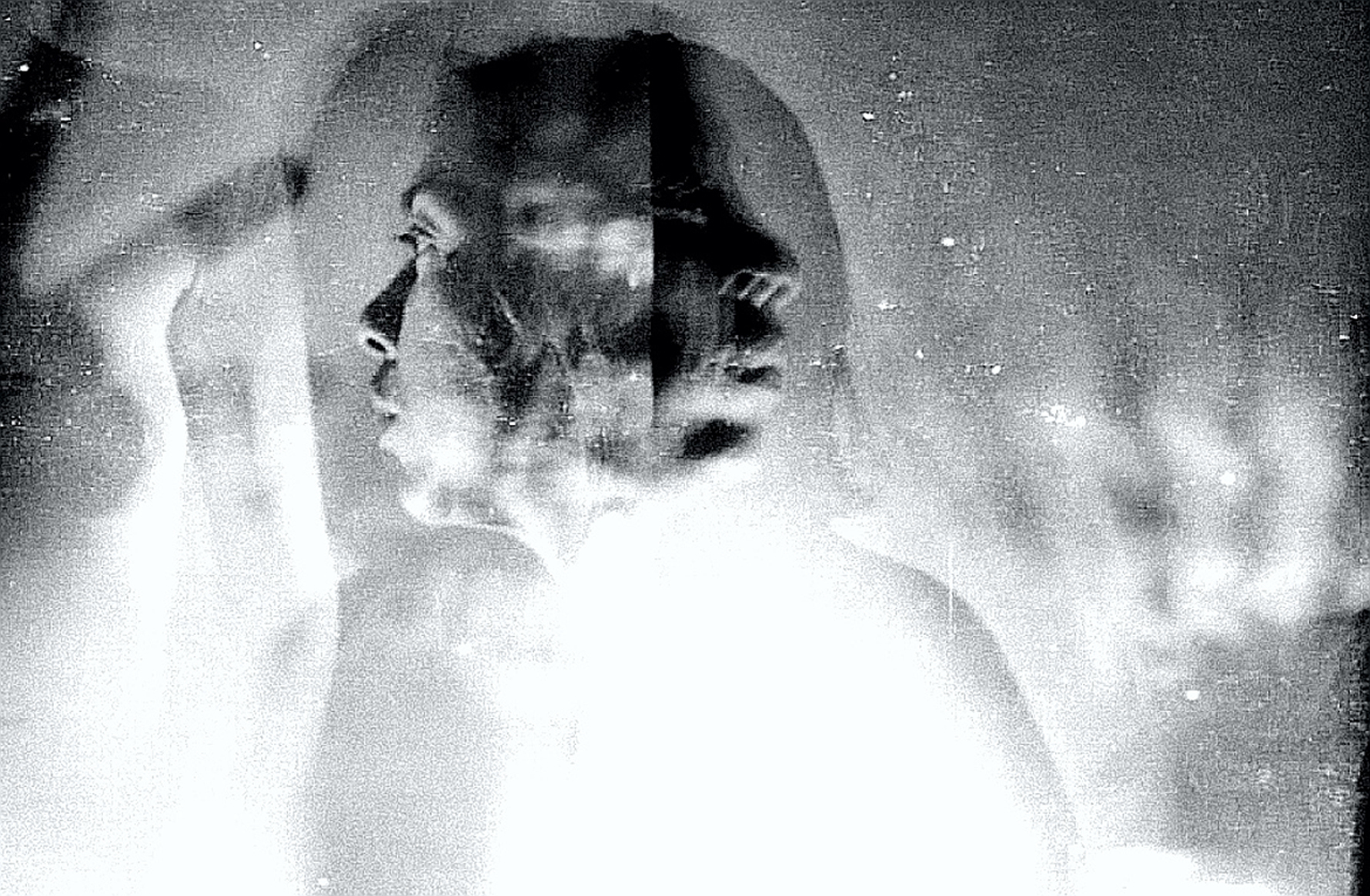
The second image is a single photo, even if it may seem a montage (figure 2)_. I used an analog camera and left the shutter open, for the light to record in the film the various movements of my face. I am looking at different directions to convey the out-of-place feeling I had when listening to many different voices, advice, and suggestions. I had to process so much information coming from many people that, at some point, I lost my way and I just did not know what to do.
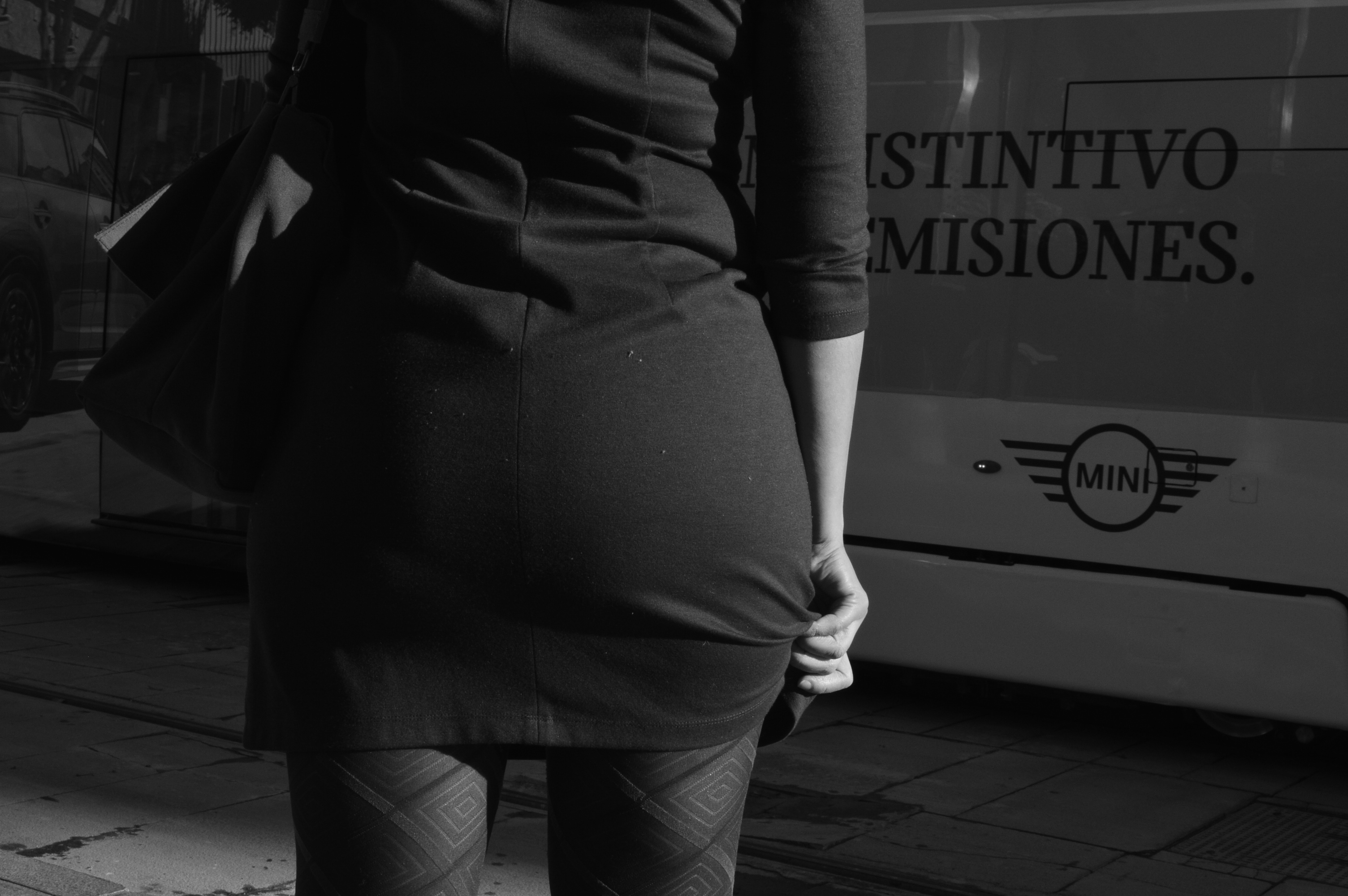
Both Spanish and foreign women experience street harassment in urban everyday life. This is me, lowering my dress in a public space waiting for the tram (figure 3). There, some men make unwanted compliments, looks, and gestures that I live as violence. These attitudes exclude women from public spaces which are designed by and for men.
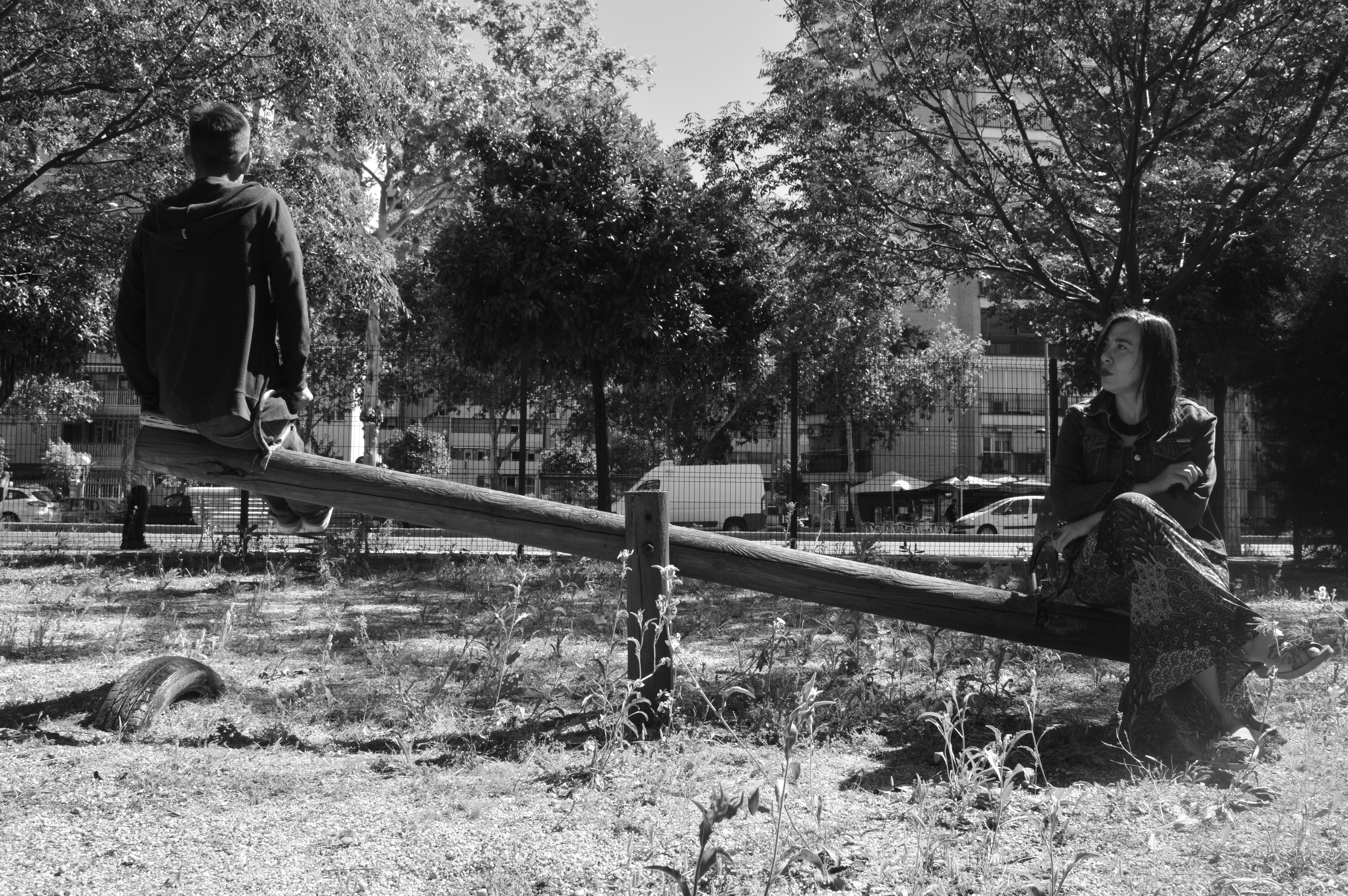
The fourth image shows the unexpected discrimination I faced when I arrived at Seville and realized that, as in my country, a job is preferably given to a man than to a woman, regardless of his qualification (figure 4). I realized that, just because of his sex, a man has privileges that I don’t enjoy. To represent this, I used an old rocker and asked a friend to be on the top while I sat at the bottom. This image is the opposite of the balance and equality that feminism pursues and that we must seek.
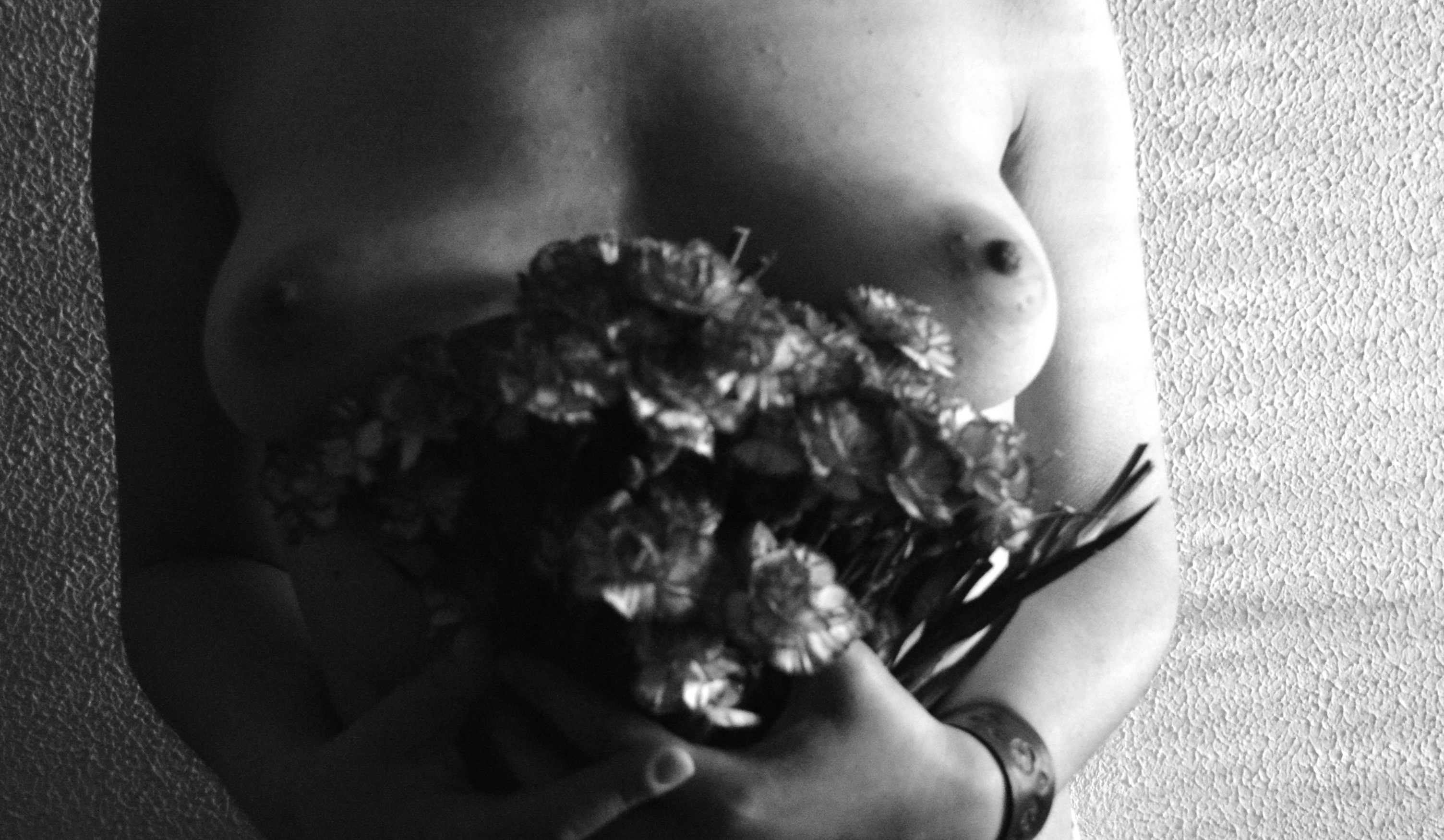
The fifth photograph shows my breasts and my hands holding a bouquet of carnations (figure 5). One of the main obstacles I encountered when arriving to Seville was the weather. The first winter caused me hypothermia. I was not used to the Spanish weather; it did not belong to my biography. To me, it was a limit to my integration. I try to adapt to it, like any other person who arrives to a city with a different climate from that of her lands and origins.
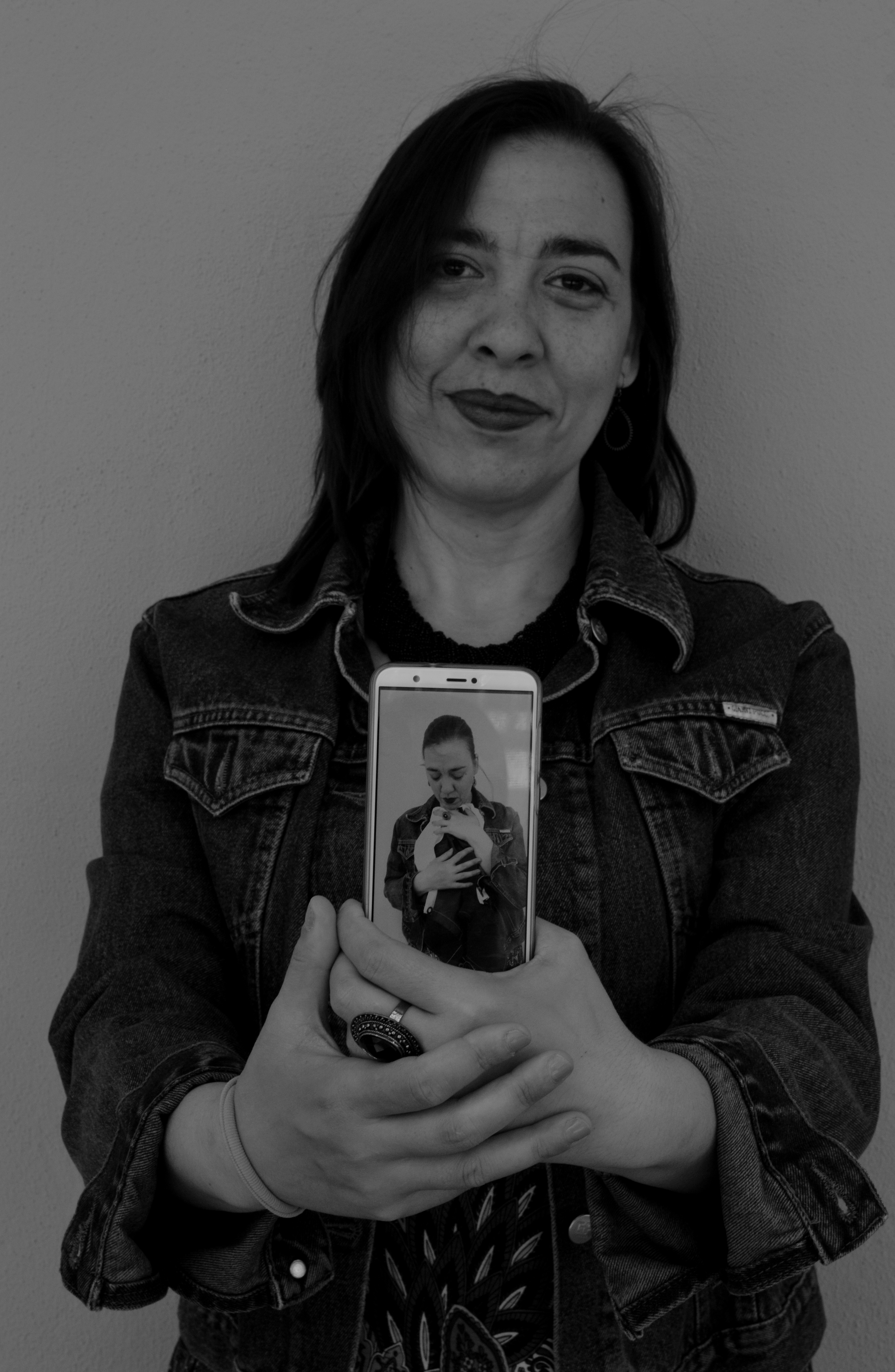
The sixth and last image are two self-portraits combined in one (figure 6). The first self-portrait is me (Adriana) smiling and showing my cellphone with a picture of myself again holding the Venezuelan flag. It represents two sides of my being: on one side is what I show to the world. On the other, what I keep inside of me. I used the flag to close the circle of the story of my photovoice, which began with this symbol.
The resistance
The process of activist storytelling has a long trajectory in sociology, anthropology, and human geography (Nos Aldás 2015). To use photovoice in migration research reveals the complexity of such processes but also uncovers the individual that experiences it in first person. Migrant women live conditions of vulnerability, especially when they move without the necessary planning and economic resources, as is the case of many Venezuelan refugees and asylum seekers who have fled the Complex Humanitarian Emergency. Both in the countries of origin and arrival, the bodies of most women attempt to resist all types of abuse, discrimination, exclusion, violations, and unfavorable situations in an array of areas, such as health, employment, right to decent housing, leisure, and food. Under these circumstances, the camera and the photovoice become a tool to denounce and show the different factors that affect us, as women and migrants, in our attempt to integrate into a new society. Images then should inform organizations, institutions, and social groups with power to develop policies that improve the conditions of the less-favored segments of the population. This is why photovoice evolves as a tool of resistance and fulfills the purpose of moving awareness and of achieving changes.
Visual activism begins by identifying and recognizing problems, and then by photographing, showing, and denouncing them. In the workshop Las Resistentes, we as participants had the opportunity to show our work in a public exhibit. I took advantage of my personal platform as a journalist to draw attention to it and invite as many people as I could. This was important to the project, an intrinsic part of it. To resist stereotypes about migrant women and to change existing discourses of hate against diversity, I had to expose them first. To me, the photovoice became a significant strategy to do so.
Resisting with a camera: What is visual activism?
Similar to Diane Arbus, Adriana’s photographs carry with them a dialectic and inseparable tension between her understanding of resistance and the images from her personal experience. In her photovoice, Adriana did something unique: she photographed herself in a sort of autobiography or autoethnography of intimate experiences. This turn was a far more personal choice than just taking pictures of objects and people signifying resistance, which is what the other course participants did. Adriana took the assignment one step further: by placing herself in front of the camera and not behind it, she embodied resistance. The feminist literature considers embodiment a crucial practice8 through which the body is read as the plateau where the biological, the social, the symbolic, and the personal interplay and, at the same time, perform games of power as well as of resistance. Through her methodological choices, Adriana transformed an individual account of distress, sadness, and anger into a shared and empowering experience. In front of the camera, she was not a mere observer who reproduced her own image of reality, but an active and social constructor of it. Even more radically, Adriana’s move symbolized that women both can and need to become the physical representation and embodiment of the reality to be represented.
Although closely related to activism and, arguably, a necessary basis for it, empowerment, understood as “a construct that links individual strengths and competencies, natural helping systems, and proactive behaviors to social policy and social change” (Perkins and Zimmerman 1995, 569) cannot substitute social engagement and change. Although activism encourages empowerment and vice versa, still they are two distinct sides of related processes. Since Wang and Burris (1994, 1997) first used photovoice to promote reproductive health among rural women in China, they paved the way for this technique to become a widespread practice in much community-based participatory research. Empowerment, visibility, self-advocacy,9 and engagement are regularly mentioned among the many positive outcomes of using photovoice while working with vulnerable populations (Nykiforuk, Vallianatos, and Nieuwendyk, 2011). Nonetheless, as Deborah Barrett (2004), Luc Pauwels (2015), Linda Liebenberg (2018) and Fairey (2018) notice, it is important to remember that these characteristics are not inherent to photovoice. Rather, they are ambitious outcomes or expected objectives facilitated by images. The process of photographing acts as a medium and not as an end: as Pauwels states, “making pictures may be a valuable part of a process to improve the situation of underrepresented or marginalized people, but there is nothing intrinsically or automatically empowering in using pictures” (2015, 129). Furthermore, when not planned correctly, photovoice projects might cause more damage than good to vulnerable populations (Barret 2004, Kihato 2010).
From our conversations, it emerged that the empowerment that Adriana experienced did not come from taking pictures and building an individual narrative around them. Rather, it derived from the decisions and choices she faced throughout the entire process, including the writing of this manuscript. In dissecting such progression of visibility and enfranchisement, we identified six main stages: first, thinking about the message a person wishes to convey, and what kinds of images best contribute to communicate that to other people; second, reflecting on the ethical concerns and personal safety involved in taking the pictures; third, situating the images in their social and political context; fourth, creating a storytelling to accompany each image; fifth, selecting and organizing the photographs around a bigger story or metanarrative that acknowledge their relationship with the contexts of the third stage; and finally, presenting the project to others to dialogue about the rationales, challenges, and outcomes of the whole process.
Images for social change and activism might convey different messages to different audiences (Cabañes 2017). This is an important challenge we needed to address, especially in the case of migrants and refugees whose images are typically instrumentalized by institutional practices and political interests. Visual activism is from this perspective a matter of negotiation and patronization of knowledge that simultaneously intersects numerous actors or agents. For instance, mass media representations play a key role in public perceptions of refugees and migrants, eventually influencing audiences, policies, and the migrants themselves (Wright 2002). In a photovoice project, migrants such as Adriana are the subjects behind the camera: they choose what to portray and how to engage the photovoice potential to counter oppressive power games.
Still, the risk of appropriation and misrepresentation of meanings, purposes, and messages of the images exists. Critical reflexivity allows this issue to be addressed (Gemignani 2017). Authors need first to reflect on their personal and social positions toward the object and act of representation. After they have gained some awareness of their subjectivities and subjectivations, they need to critically consider what alternative positionings and narratives may accompany the photos. Yet the right message in the wrong place is still at risk of missing the target and its desired impact at the political level. It is important, then, that photographs and narratives are purposefully and critically chosen and are presented in places and contexts that are ready to listen (Dreher 2009).
The above reflections hold that even if the method of photovoice might be a valuable instrument to support research and community engagement with migrants, producing images, talking about them, and showing them do not automatically translate into community empowerment. And even in the instances in which empowerment may occur, such experience does not always lead to activism. In other words, there is no magic formula to convert a photovoice project into visual activism.
Still, we would like to note two intertwined positions that Adriana and I took during our collaboration and that might be useful to shed some light on. First, we stressed the importance of crossing disciplines to facilitate reaching out to different audiences. Second, we presented our work to these diverse audiences in order to keep the research open, as a work in progress rather than a finished project. In our experience, this is the most overlooked phase of photovoice research: instead of presenting the pictures and narratives as final products, they should be seen as becomings that allow for “constructing constructions and narrating narratives” (Gemignani and Hernandez-Albujar 2019, 140) that are always evolving, relational, and relative.
Interdisciplinarity
Adriana and I came from different disciplines that, as for any field, carry unique epistemological and communication styles. As a journalist, Adriana had a preference for telling stories and dialogue with others. Her openness to share her very personal photovoice project beyond the workshop responded to this inclination as well as to our commitment to find broader audiences. Adriana was familiar with spreading her stories through multiple communication and social channels, which she did to promote the photovoice exposition at the end of the seminar. As a sociologist working in academia, my audiences were somewhat more reduced, and I was unfamiliar with sharing stories that do not comply with the traditional academic format. My goal was to dwell in the social context and the processes I observed during the workshop of Las Resistentes, and to establish a dialogue with the existing literature and theories concerning photovoice and activism.
To combine these two styles of knowing and sharing required a reciprocal adaptation that enriched our own perspectives on migration and pushed our understandings of visual activism. In my own field, classic (positivist, post-positivist, and empiricist) academic discourses tend to describe, explain, and predict social phenomena in a form of “expository” analysis (Bal 1996). Under these premises, the subject of study is involved only to a certain degree (typically to collect data), but they are missing when analyzing data and writing academic manuscripts. In the case of visual research, to display images that do not belong to the researcher, who nonetheless has the final word about the theoretical framework that accompany them, is also a subtle form of appropriation and power. By writting and thinking about this article together, we broke apart from these traditional research roles and positions. Adriana’s pictures are a source of information, but she also takes part on our insights about photovoice and activism. Participatory and critical visual activism requires, first, avoiding the use of participants’ images as commodities for one person’s research (Szörényi 2006), which can simply be used as an existing product detached from its author and its user. Second, challenging the research hierarchies involved between researcher and researched (Chalfen, Sherman, and Rich 2010, Gemignani 2011) required ongoing negotiations that eventually blended traditional roles. For both of these requirements, it was necessary for Adriana and me to collaborate in all of the steps of the inquiry.
Outreach to diverse audiences
The second position we took concerns sharing the outcomes with broader audiences, a usually overlooked part of visual activism. As Wang (1997) argues, photovoice implies the researchers’ ongoing effort to ensure that both its messages constructed through the images and its social activism are brought forth through publications, exhibitions, public meetings, and any combination of these. While most photovoice projects end up with a one-time photograph exhibit or display, we engaged with innovative possibilities to reach out to new audiences in order to underscore how we used images to communicate with others our message of nonconformity and our invitations that resistance and alternatives to the status quo were possible.
This phase of the project, like the previous ones, also depended on the commitment, time, resources, and creativity of the actors involved. In addition to the photography exhibit, we presented Adriana’s photovoice and our collaboration at two conferences, we wrote this manuscript for publication, and planned to explore other platforms to share Adriana’s visual narrative and our partnership experience such as a blog. These initiatives constituted “listening spaces” that keep open the conversation about discrimination against migrant women and explore alternative ways to resist to such discrimination.
Creative thinking is important, but creative thinking is more than creativity: it is creativity with a purpose. For visual activism, it concerns the “interaction of pixels and actions to make a change” (Mirzoeff 2015; 297) in a journey in which the means becomes the goal, and the goal transcends the individual to become social. In the methodological case here presented, individual critical picture taking promoted social awareness, engagement, and resistance in an evolving variety of audiences. In other words, any action to actively search for new, larger, even unexpected audiences is a means to encourage transformation and to sustain participation in social activism. If and how this action is able to provoke significant changes is difficult to assess. Yet a qualitative evaluation is undoubtedly not the end of the process but an integral part of it, even more so when social activism is the goal.
Conclusions
Adriana’s photographs were a unique type of account. They offered personal interpretations of some experiences that migrant women in Spain may live. Similarly to Diane Arbus, Adriana pointed the camera toward herself, and captured what was happening in the societies from which her experiences were being fed. Her pictures and her narrative represented an opportunity to gain access to legitimate discourses that may contribute to the knowledge we have of our society. It changes our perspective and gives to the camera the means of resistance. This essay describes a collaborative researcher-to-researcher approach to visual activism and draws on a multidisciplinary and pluricultural perception of gender and migration. Since Judith Butler’s theoretical framework on the construction of gender and sexuality and Zygmunt Bauman’s work on globalization and migration, identity construction has been progressively understood as a subjectively positioned process that moves among multiple relations of tension and resignification. Although fluidity and flexibility should guide the citizen of the future, conservative discourses and rigidities seem to gain strength in public arenas. Opposition to such discourses might come from a number of fronts, but when counter-acting activism is the goal, we should privilege the voice/vision and experiences of those who live in first person the consequences of discriminatory discourses. Images represent a valuable tool to channel activism and resistance when used to promote critical thinking and to question the status quo of dominant discourses and social orders.
This photovoice project on migration and resistance documents a project on critical reflexivity in visual studies and visual engagement. Influenced by our readings of Diane Arbus’ work and her unconventional urban portraits, we presented Adriana’s images and experiences. Her personal story might be specific, but it is not, by any means, merely anectodical. Rather, her photovoice can be understood as a manifestation of the voice and testimony of many migrant women in Spain. Their stories are tales of uprooted bodies and displaced subjectivities attempting to find novel and legitimate spaces of action in a political context that leaves little space for empowerment. They are women who face challenges in places which non-migrant people find accommodating, or at least unthreatening. Furthermore, we also presented the importance of critical reflexivity in the process of picture taking to keep the focus on social transformation and empowerment and to keep the photovoice participatory rather than paternalistic.
As John Grady (2007) reminded us when talking about advertising, images act as social indicators of group relations. As such, they help us to better understand not only the social and political context in which we live, but also the ways in which we participate toin it, whether by conformance or resistance. When done reflexively, using a camera to tell stories opens up possibilities to transform implicit, normalized, or disregarded social phenomena into noticeable and problematizable political processes. The camera becomes the narration through which the author can host affective and material forces for change and transformation. For such possibility to materialize into something tangible, the camera needs to produce more than images. Visibility is key in this endeavor, because it goes beyond representation to expose the power dynamics that occur in society. As such, the public exhibit at the end of the workshop project as well as this article are key to reach to audiences and expose the issue. The camera per se is not enough, but when used purposefully and critically, it may articulate the world in ways and modes that may incite awareness. We make a case for considering photovoice as a multidimensional and complex road that entails thinking and producing as well as collaborative sharing, discussing, and negotiating the images, the process of taking them, their meanings and actions, and the political or power-based circumstances surrounding the images and the photovoice. It is only within such necessary epistemological complexity that we can consider photovoice a tool for activism and social change.
Works Cited
Arbus, Diane. Diane Arbus: An Aperture Monograph. New York: Aperture Foundation, 1972.
Bal, Mieke. Analyzing Visual Data. Thousand Oaks, CA: Sage, 1992.
Bal, Mieke. Double Exposures: The Subject of Cultural Analysis. New York: Routledge, 1996.
Barrett, Deborah. “Photo-Documenting the Needle Exchange: Methods and Ethics.” Visual Studies, vol. 19 no.v2, 2004, pp. 145-149. DOI: 10.1080/1472586042000301647.
Bosworth, Patricia. Diane Arbus: A biography. New York: W.W. Norton, 2005.
Cabañes, Jason Vincent A. “Migrant Narratives as Photo Stories: on the Properties of Photography and the Mediation of Migrant Voices.” Visual Studies, vol. 32 no. 1, 2017, pp. 33-46. DOI: 10.1080/1472586X.2016.1245114.
Chalfen, Richard, Shelman Laura, and Rich, Michael. “VIA’s Visual Voices: The Awareness of a Dedicated Audience for Voices in Patient Video Narratives.” Visual Studies, vol. 25 no. 3, pp. 201-209.
Dreher, Tranja. “Listening across Difference: Media and Multiculturalism Beyond the Politics of Voice.” Continuum, vol. 23, no. 4, pp. 445-458. DOI: (10.1080/10304310903015712)[https://doi.org/10.1080/10304310903015712].
Edenborg, Emil. “Saving Women and Bordering Europe: Narratives of ‘Migrants’ Sexual Violence’ and Geopolitical Imaginaries in Russia and Sweden. Geopolitics, vol. 25, 2018, pp. 1-22. DOI: (10.1080/14650045.2018.1465045)[https://doi.org/10.1080/14650045.2018.1465045].
Fairey, Tiffany. “Whose Photo? Whose Voice? Who Listens? ‘Giving,’ Silencing and Listening to Voice in Participatory Visual Projects.” Visual Studies, vol. 33, no. 2, 2018, pp. 111-126. DOI: 10.1080/1472586X.2017.1389301.
Gemignani, Marco. “Between Researcher and Researched: An Introduction to Countertransference in Qualitative Inquiry.” Qualitative Inquiry, vol. 17, no. 8, 2011, pp. 701-708. DOI:10.1177/1077800411415501.
Gemignani, Marco and Hernández-Albújar, Yolanda. “Critical Reflexivity and Intersectionality in Human Rights: Toward Relational and Process-Based Conceptualizations and Practices in Psychology.” European Psychologist, vol. 24, no. 2, 2019, pp. 136-145.
Grady, John. “Advertising Images as Social Indicators: Depictions of Blacks in LIFE Magazine, 1936–2000.” Visual Studies, vol. 22, no. 3, 2007, pp. 211-239. DOI: 10.1080/14725860701657134.
Gross, Frederick. Diane Arbus’s 1960s: Auguries of Experience. Minneapolis: University of Minnesota Press, 2012.
Hooks, Bell. “Choosing the Margins as a Space of Radical Openness.” Framework: The Journal of Cinema and Media, vol. 36, 1989, pp. 15-23, http://www.jstor.org/stable/44111660.
Kihato, Caroline W. “Now You See Me Now You Don’t: Methodologies and Methods of the Interstices.” Gender and Migration, edited by Ingrid Palmary, et al., Zed Books, 2010, pp. 141-162.
Liebenberg, Linda. “Thinking Critically About Photovoice: Achieving Empowerment and Social Change.” International Journal of Qualitative Methods, vol. 17, no. 1, 2018.
Lubow, Lubow. “Arbus Reconsidered.” 14 September 2003. https://www.nytimes.com/2003/09/14/magazine/arbus-reconsidered.html
Mirzoeff, Nicholas. How to See the World. London, UK: Penguin, 2015.
Nos Aldás, Eloísa.. “Activism, Transmedia Storytelling and Empowerment.” New Media Politics: Rethinking Activism and National Security in Cyberspace. Cambridge Scholars Publishing, 2015.
Nykiforuk, Candace I J, Helen Vallianatos, and Laura M Nieuwendyk. 2011. “Photovoice as a Method for Revealing Community Perceptions of the Built and Social Environment.” International Journal of Qualitative Methods, 10(2): 103-124.
Pauwels, Luc. “Participatory Visual Research Revisited: A Critical-constructive Assessment of Epistemological, Methodological and Social Activist Tenets.” Ethnography, vol. 16, no. 1, 2015, pp. 95-117.
Perkins, D.D. and Zimmerman, M.A. Empowerment Theory, Research, and Application. American Journal of Community Psychology, vol. 23, 1995, pp. 569–579. https://doi.org/10.1007/BF02506982.
Szörényi, Anna. “The Images Speak for Themselves? Reading Refugee Coffee‐table Books.” Visual Studies, vol. 21, no. 1, 2006, pp. 24-41. DOI: 10.1080/14725860600613188.
van Dijk, T. A. “Discourse and the Denial of Racism.” Discourse & Society, vol. 3, no. 1, 1992, pp. 87-118.
Wang, Caroline. “Photovoice: A Participatory Action Research Strategy Applied to Women’s Health.” Journal of Women’s Health, vol. 8, 1997, pp. 185-192.
Wang, Caroline, and Burris, Mary Ann. “Empowerment through Photo Novella: Portraits of Participation.” Health Education Quarterly, vol. 21, 1994, pp. 171-186.
Wang, Caroline, and Burris, Mary Ann. “Photovoice: Concept, Methodology, and Use for Participatory Needs Assessment.” Health Education and Behavior, vol. 24, 1997, pp. 369-387.
Wayne A. Cornelius. “Controlling ‘Unwanted’ Immigration: Lessons from the United States, 1993–2004.” Journal of Ethnic and Migration Studies, vol. 31, no. 4, 2005, pp. 775-794.
Wright, Terence. “Moving Images: The media Representation of Refugees.” Visual Studies, vol. 17, no. 1, 2002, pp. 53-66. DOI: 10.1080/1472586022000005053.
Yáñez-Urbina, Cristopher, Figueroa-Céspedes, Ignacio, Soto, Jorge, and Happke, Bruna. “La Voz en la Mirada: Fotovoz una Metodología para Explorar los Procesos de Inclusión-exclusión desde la Perspectiva de los Estudiantes.” Pensamiento Educativo: Revista de Investigación Educacional Latinoamericana, vol. 55, 2018. DOI: 10.7764/PEL.55.2.2018.4.
Notes
-
For more information about the course and its content visit: http://lasresistentes.saharasevilla.org/curso/.↲
-
Arbus used mostly a Rolleiflex 6×6 producing a characteristic squared format.↲
-
9 de Abril Palacio de Congresos de Córdoba https://casoaislado.com/santiago-abascal-no-queremos-una-europa-islamizada-vamos-a-iniciar-la-reconquista/↲
-
Pablo Casado, the head of the second-most important party in Spain, declared to the press “Hay estudios policiales que dicen que hay un millón de inmigrantes esperando en las costas libias” que van a tomar “las rutas españolas” 29 July 2018 https://www.eldiario.es/desalambre/Pablo-Casado-rechaza-acogida-inmigrantes_0_797920524.html↲
-
During the 2019 International Women’s Day Celebration on 8 March, official sources estimated more than 770,000 participants only in Madrid, Valencia and Barcelona https://elpais.com/sociedad/2019/03/08/actualidad/1552079524_186232.html↲
-
http://aieti.es/wp-content/uploads/2019/02/COMUNICADO-.pdf more than 20 collective groups signed the manifesto.↲
-
CHE has been defined by the UN as a “humanitarian crisis in a country, region or society in which there is a total or considerable breakdown of authority, as a result of internal or external conflict, and which requires an international response that goes beyond the mandate or capacity of a single agency” (Inter-Agency Standing Committee, IASC, 1994).↲
-
Judith Butler, borrowing from the phenomenological tradition of Merlau Ponty in Bodies that Matter became a leader in the field of feminist theory and the constitution of the body.↲
-
See for instance www.photovoice.org, www.photovoiceworldwide.com, or https://foodarc.ca/makefoodmatter/wp-content/uploads/sites/3/VOICES_PhotovoiceManual.pdf↲