

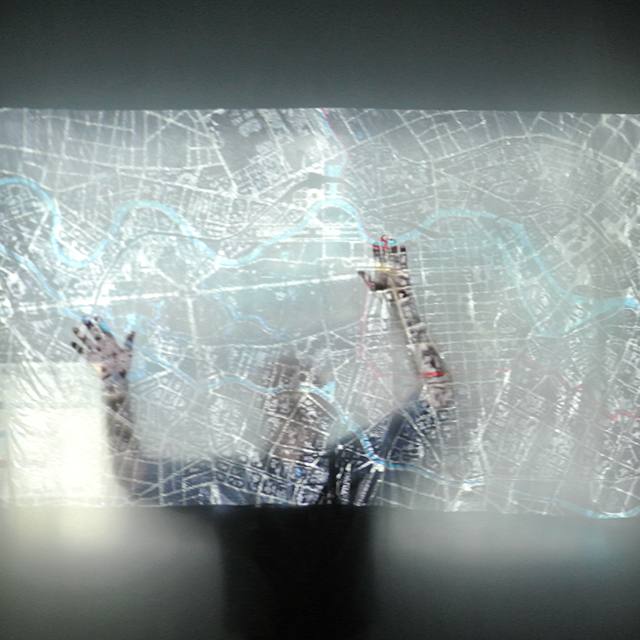
Projecting histories onto bodies © Bodycrisis / IOD (IMAGE 10) – Click Image to Continue
Against this backdrop, East Berlin occupies a specific place in cultural memory and the practice of cultural stereotyping—where counterculture thrived in the 1980s GDR and where subcultures blossomed in the early 1990s, often nurtured by activists from West Berlin seeking to extend their urban playground in the East. (On West German activists in East Berlin, see Smith in this issue.) East Berlin evolved as a comfort zone of social experimentation, while the new federal states in the East faced the consequences of rapid reorganization in all areas of life: mass unemployment and widespread industrialization, the breakdown of social and cultural services and institutions, rapid demographic declines caused by East-West and urban migration, shrinking cities and deserted rural areas—the post-socialist landscapes of change.