

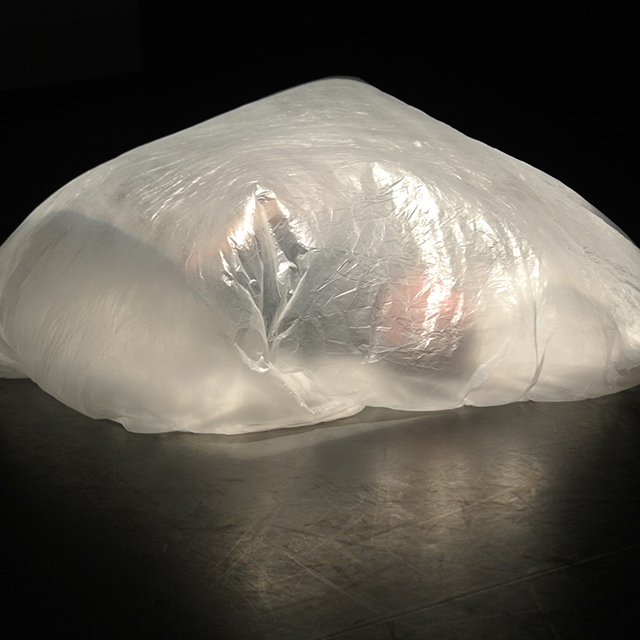
Scene from the performance, The map © Bodycrisis / IOD (IMAGE 13) – Click Image to Start Video
As such, the continuity of everyday practices provided a comfort zone, helping to preserve a sense of self in the light of intense devaluation of the former life and everyday practices in dominant public discourses. Moreover, we might imagine this comfort zone as an oxygen tent that can conserve everyday practice and that counteracts the suffocating quality of capitalist consumerism and overall change. Prolonged everyday practices thus served as a source of social identification and belonging, but also as cultural capital to secure scarce financial resources. To give but one example, it limited potential excessive buying and experimentation, throwing out all household items in exchange for new Western goods (Bude et al. 31). Everyday practices also formed a cocoon against the bitter reality of social discrimination based on cultural stereotyping, for example, by fostering a disregard for public discourse on GDR politics of the body (e.g., disregard for makeup, mainstream naturism, and sex practices) or deliberately ignoring advertisements that promote specific ideals of beauty.
Lastly, Meta’s account reveals how reticence to assimilate culturally on the level of the everyday and particular practices could be used as a means for self-identification beyond the felt provincialism of German-German stereotyping. Here, everyday practices served as a buffer zone, confronting and undermining expectations and stereotypes of what East Germans are and how they prefer to identify themselves.