

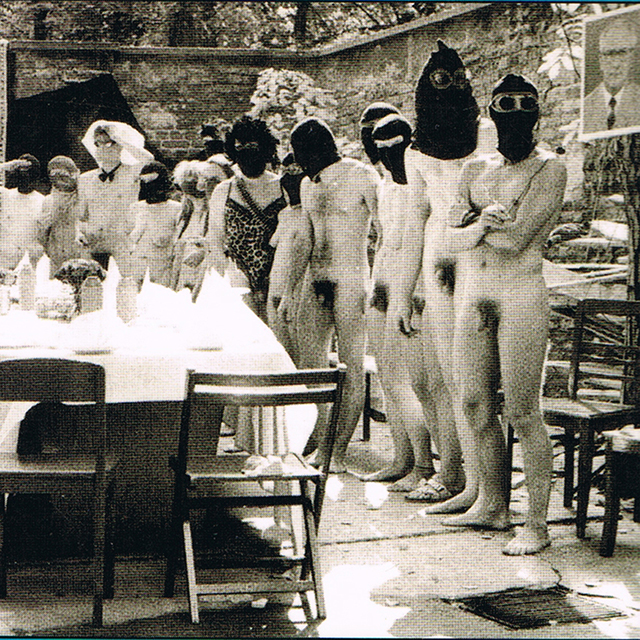
Kommune I, the most famous squat in Mainzer Straße, East Berlin 1990 © Umbruch Bildarchiv (IMAGE 4) – Click Image to Continue
Frequently researchers approach the everyday of 1989-90 as a transitional, extraordinary, and somewhat anarchic period in which many East Germans made rules on the go and experimented in all areas of life (Links et al. 1; Holm and Kuhn 644). Hence, these accounts tend to document experimental practices and thriving subcultural communities, e.g., squatting and alternative living experiments, techno culture, and political projects. (On squatters and techno culture, see Smith, and on subcultural artists, see Eisman in this issue.) In summary, when we do find pictures of the everyday in 1989-90, they depict a temporary, exceptional period of sociocultural practices that render obsolete the realities hitherto known as ordinary.