

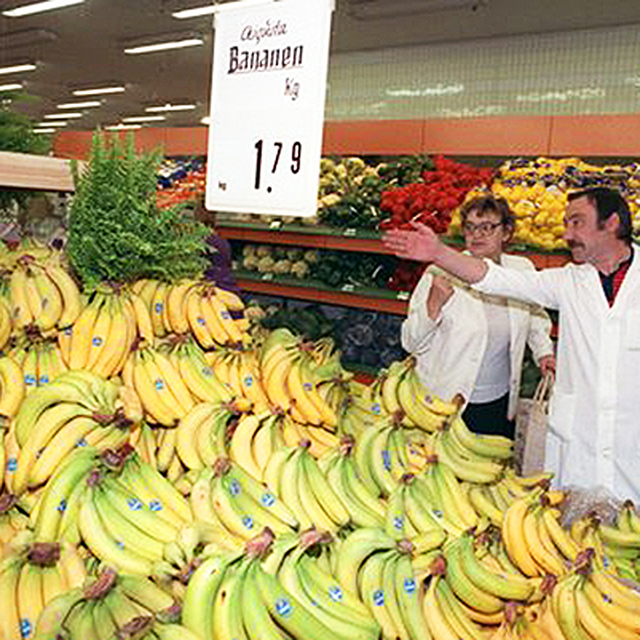
Example of East German shop (Kaufhalle) answering to the desires of East Germans in 1990 © dpa / MZ.web (IMAGE 5) – Click Image to Continue
In the context of narratives that focus on 1989-90 as a period of state and sociocultural transition from an Eastern to a Western model, this exceptionality seems particularly obvious. Searching for traces of the everyday in this discourse, many examples establish GDR citizens as the historical Other. They feed German-German cultural stereotyping by concentrating on consumption, depicting extraordinary events such as shopping sprees to West Berlin and West Germany, targeting a demand for bananas, cheap electronics, second-hand cars, and other Western daily goods. This kind of focus still dominates the discussion about the nature of GDR citizens’ needs and wishes for the future.