

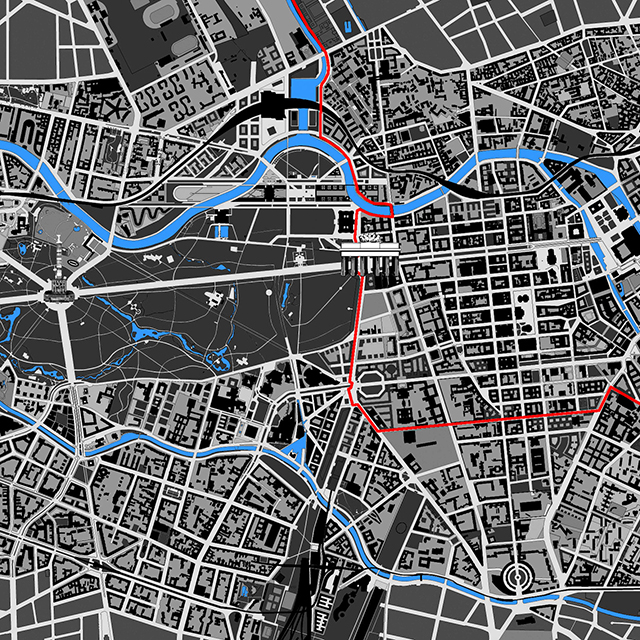
Plan for the “New Berlin,” 1997. Map of Berlin with demarcation of Wall © Senatsverwaltung für Stadtentwicklung Berlin (IMAGE 9) – Click Image to Continue
Interestingly, the women interviewed for the project did not focus on the way in which the all-encompassing rejection of work experience mirrored an overall rejection of the lived experience of GDR citizens that was evident in the Wende process. This rejection ranged from blue collar to academic work in the context of liquidating and converting institutions (Abwicklung), not to mention political bureaucracy. While a minority of women employees were made redundant as early as 1990, the symbolic rejection of quotidian practices that came with ridiculing and mocking their outward appearance and habits seemed to weigh much more at this particular point in their lives. It was within this context that the interviews conducted for the Bodies of Crisis project picked up on stereotyping in relation to how it informed everyday practice. Meta’s account was the most pronounced in identifying a strategy of creative everyday resistance. She remembered engaging in camouflage tactics: “I hated the stereotyping, I really did… I moved to Berlin during that time… I got myself a map of Berlin and pretended to be a tourist, dressing like a stranger.”